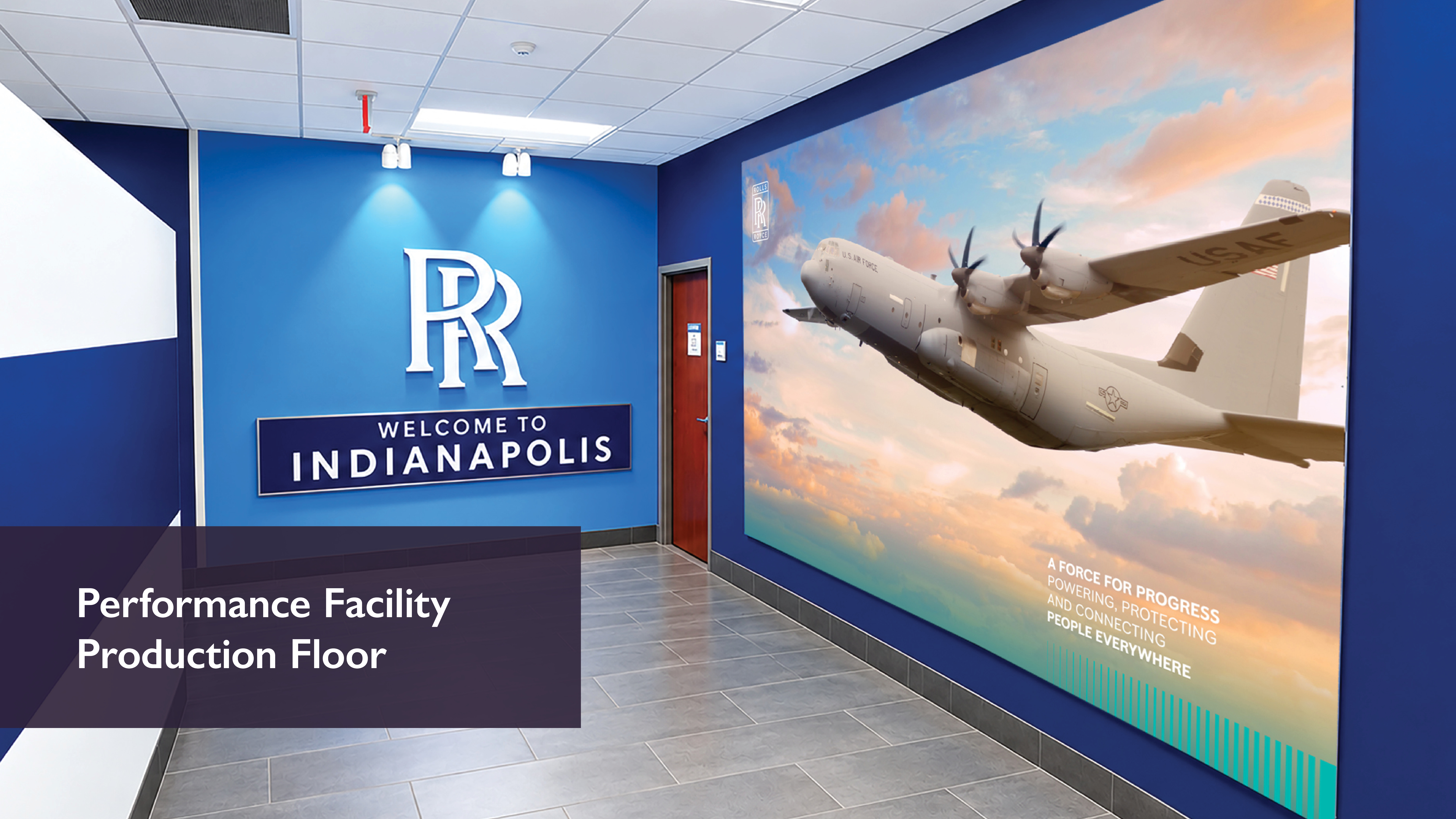
Safety Experience
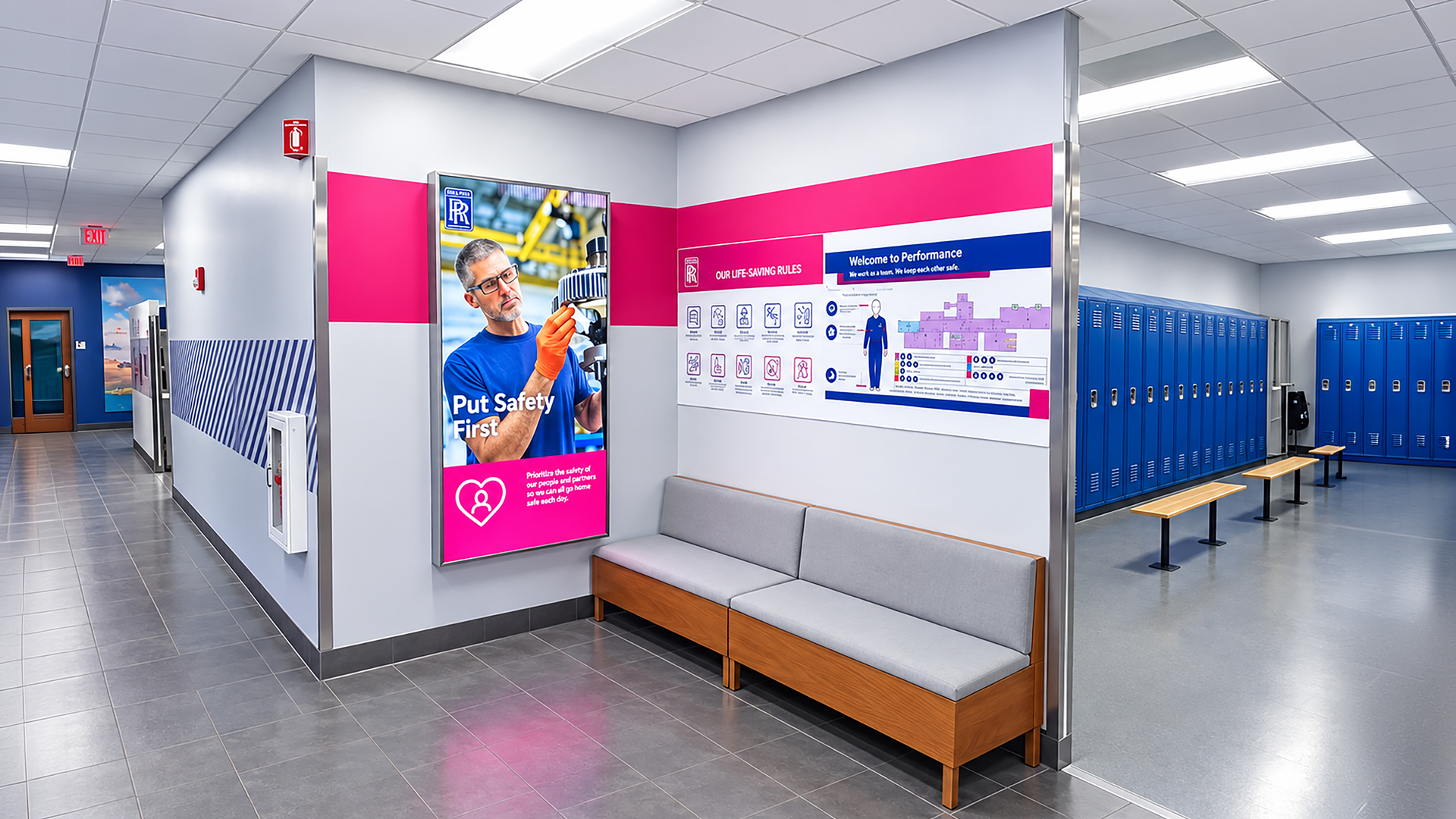
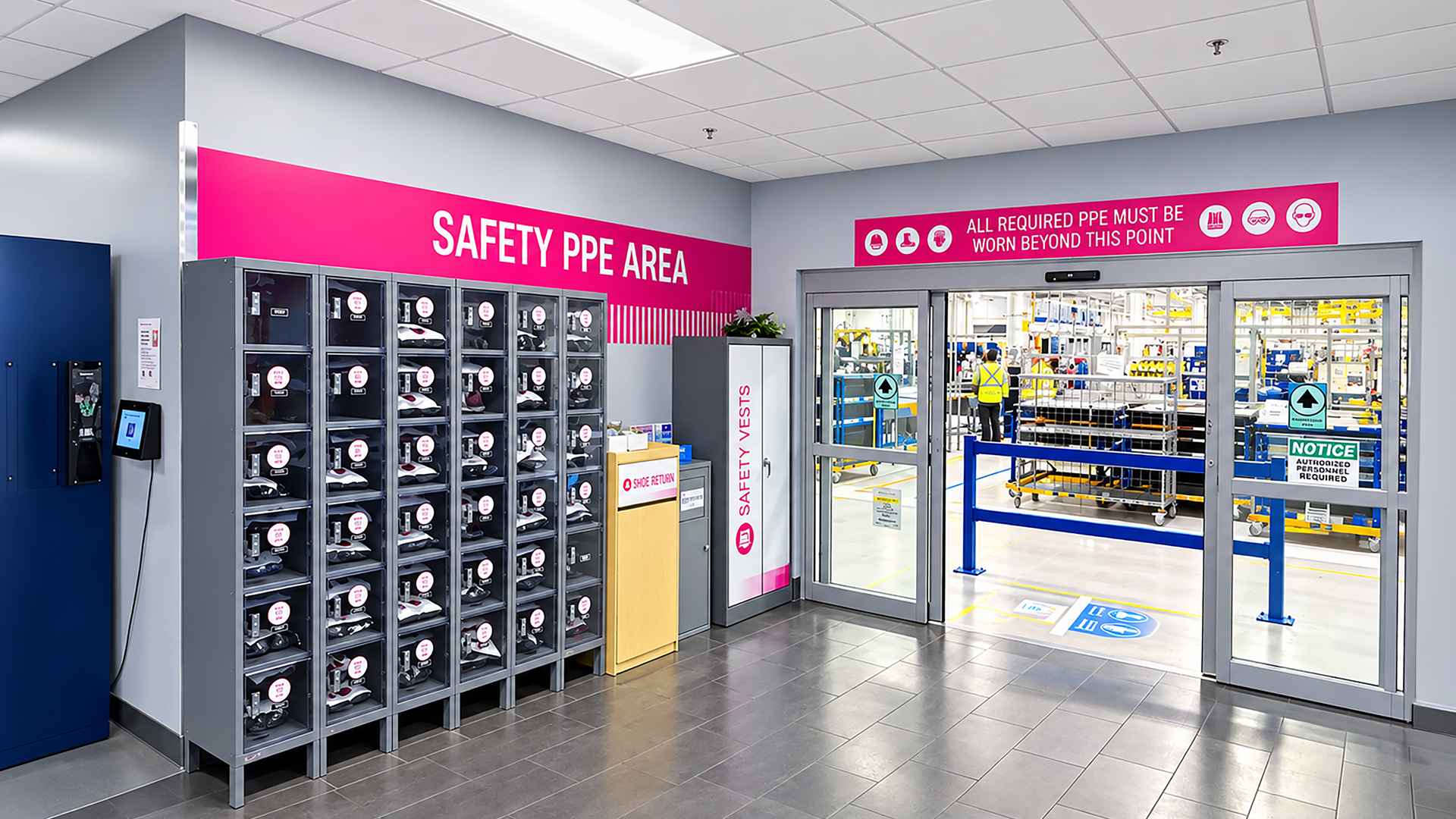
Rolls-Royce places an extremely high priority on safety within its facilities. Personnel and visitors are initially greeted with a dedicated safety experience before entering the production floor. My intention was to interrupt the visitor sightline with the bold pink used within the company's safety branding standards, creating an immediate visual cue that safety is a priority. The area includes a large lightbox image emphasizing the importance of safety, a map identifying designated safety areas, and a poster outlining facility safety rules. Lockers provide safety shoe spats in multiple sizes as well as safety vests, which all non-Rolls-Royce visitors are required to wear. I also incorporated seating to provide visitors with a dedicated area to change their shoes before entering the production floor.
Bringing the Human Element Into the Facility
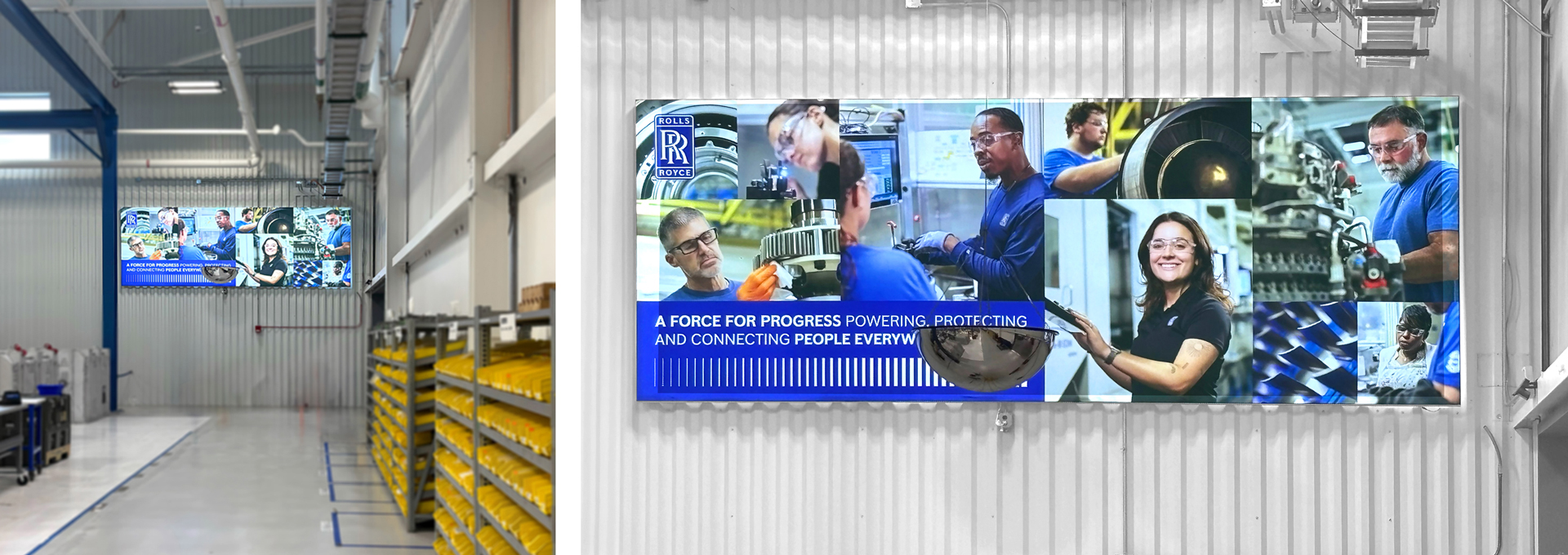
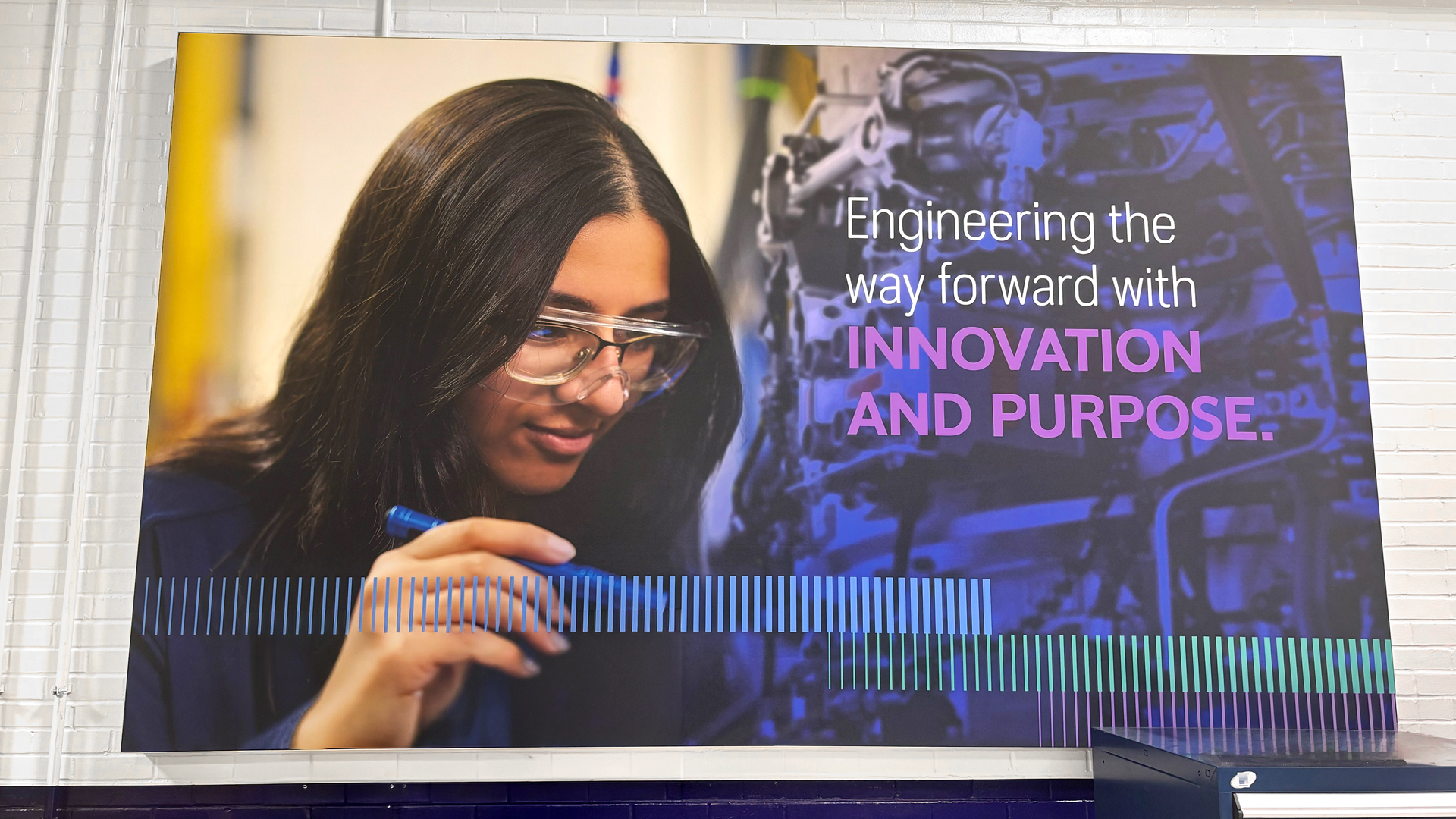
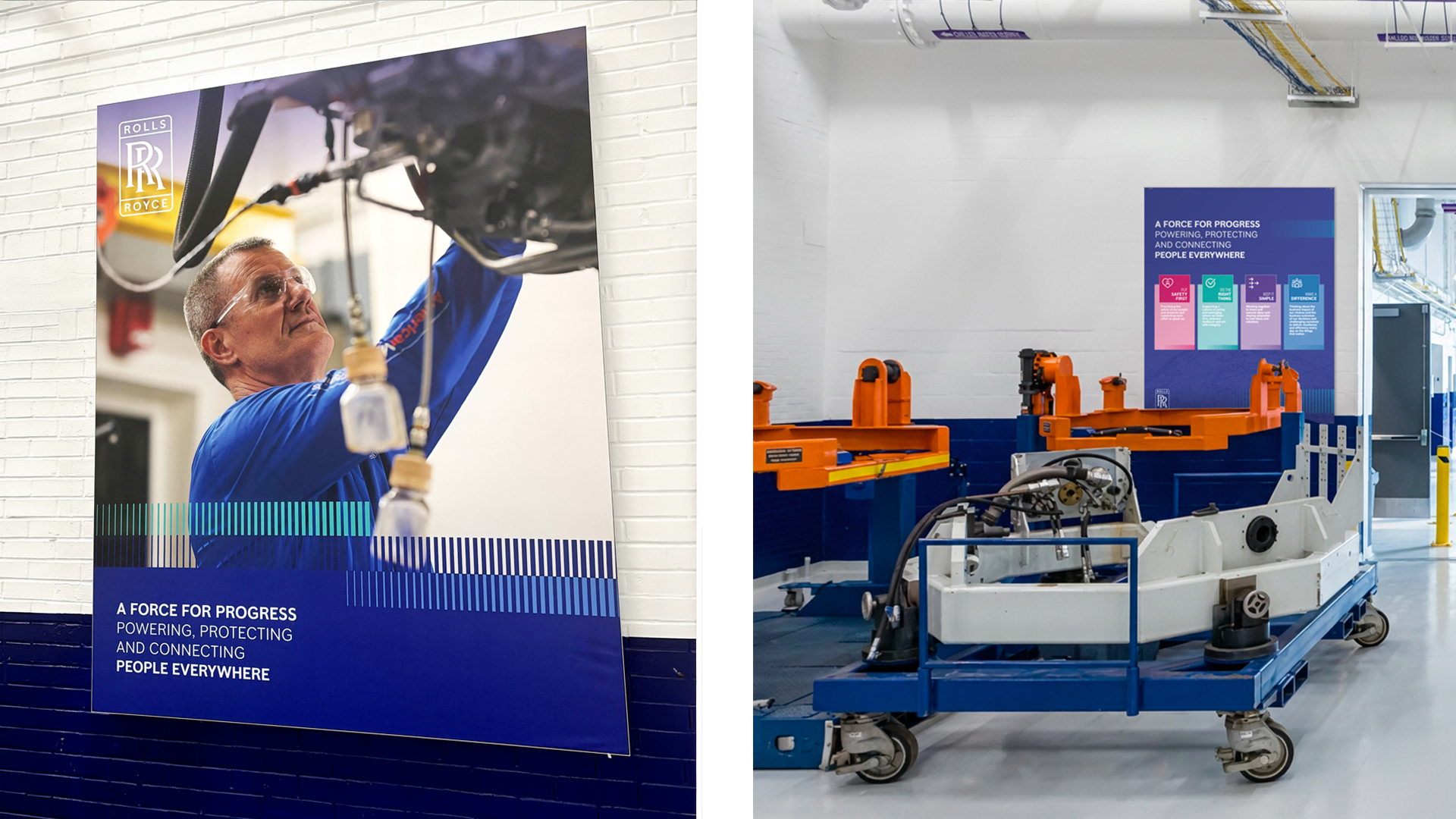
To bring a sense of humanity into the environmental graphics, I directed a photoshoot featuring actual Rolls-Royce personnel in their workspaces. Using employees rather than stock photography helped create a more authentic connection between the technology being produced and the people responsible for producing it. The photography also helps promote morale and reinforces the idea that the facility's capabilities are driven by its people.
Upon entering the production floor, visitors encounter a large lightbox positioned within a key "strike zone" to the right.
The concept brings together people from multiple areas of expertise, all working toward the same goal: delivering advanced aerospace technology.
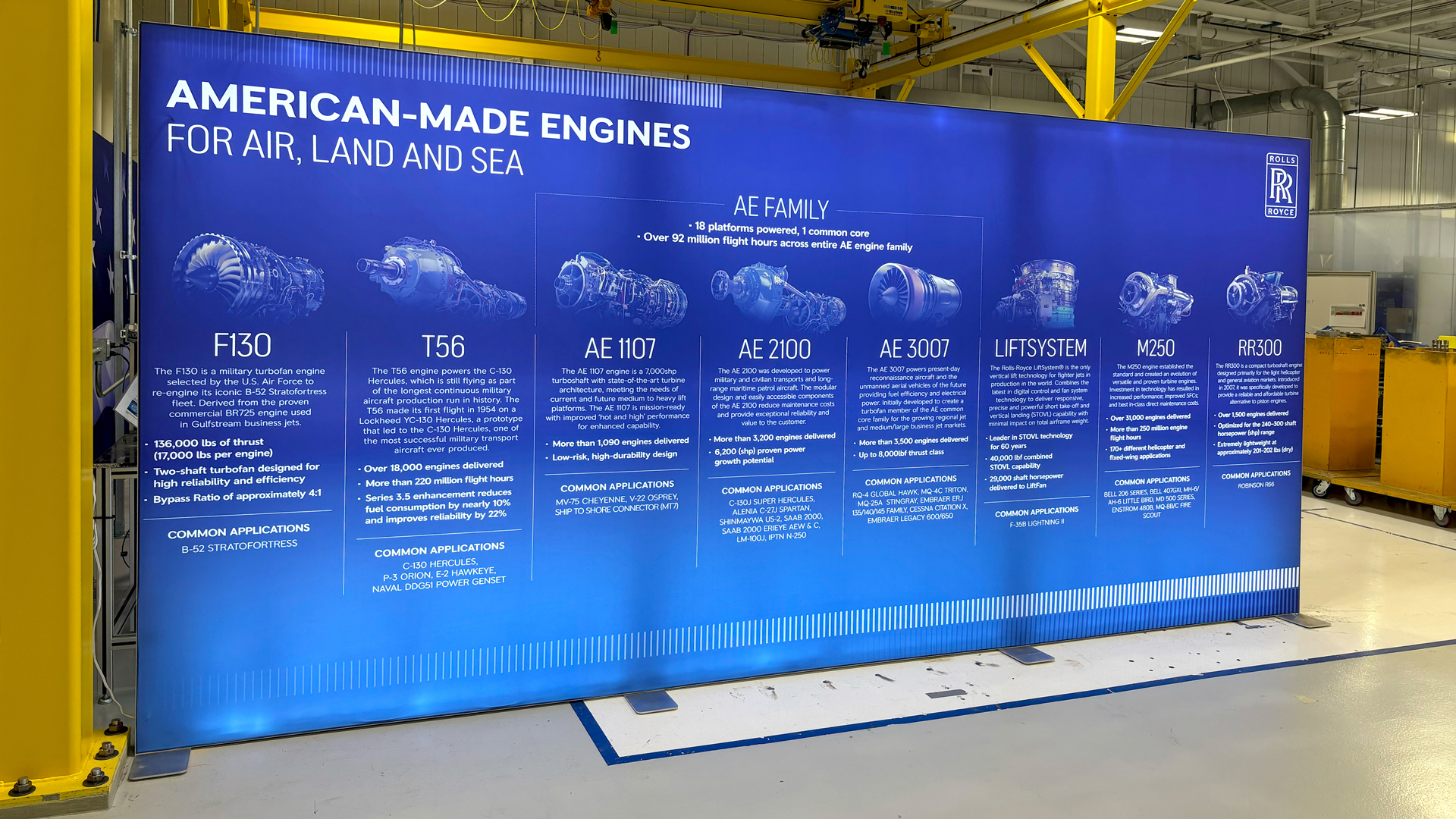
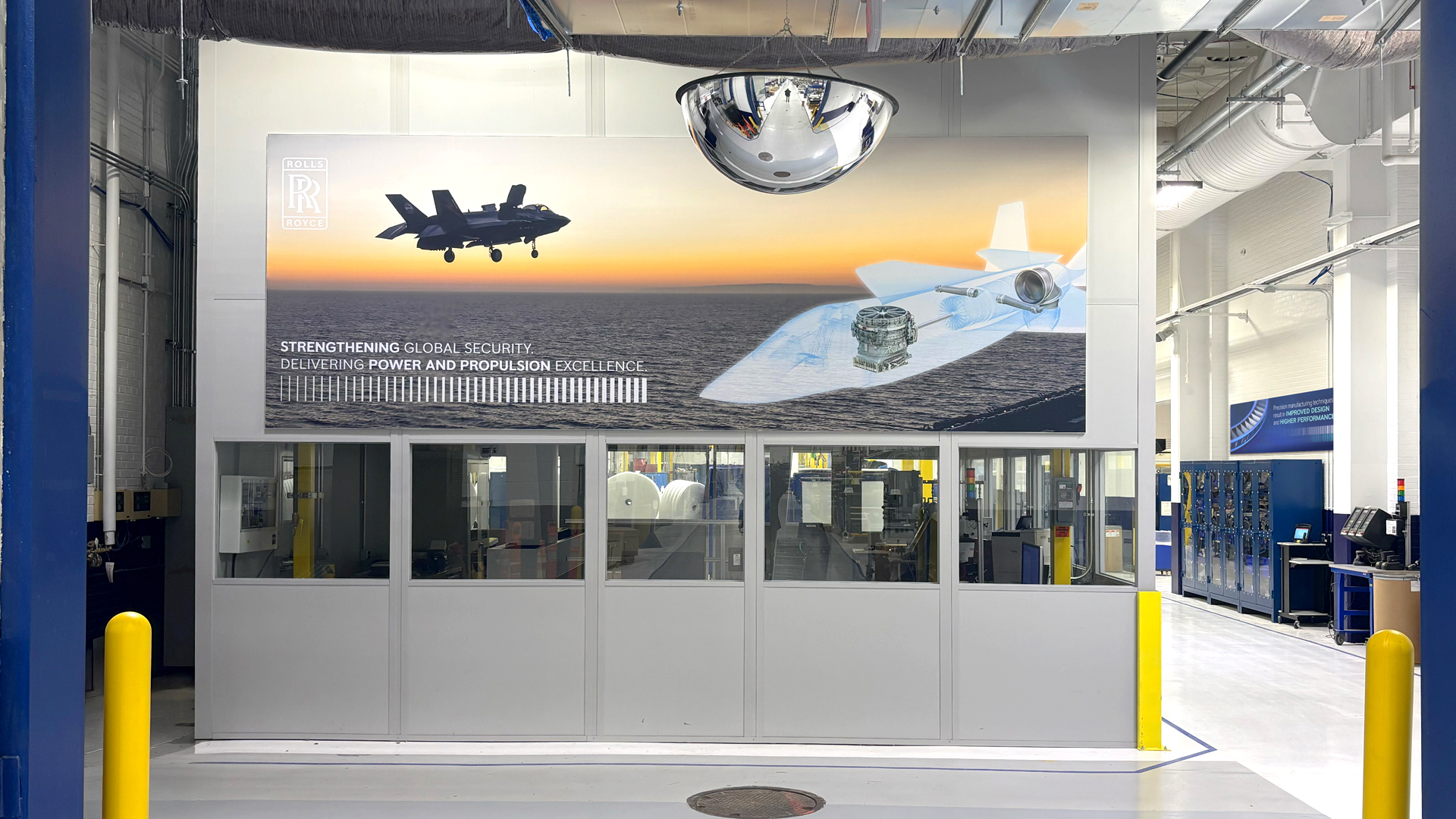
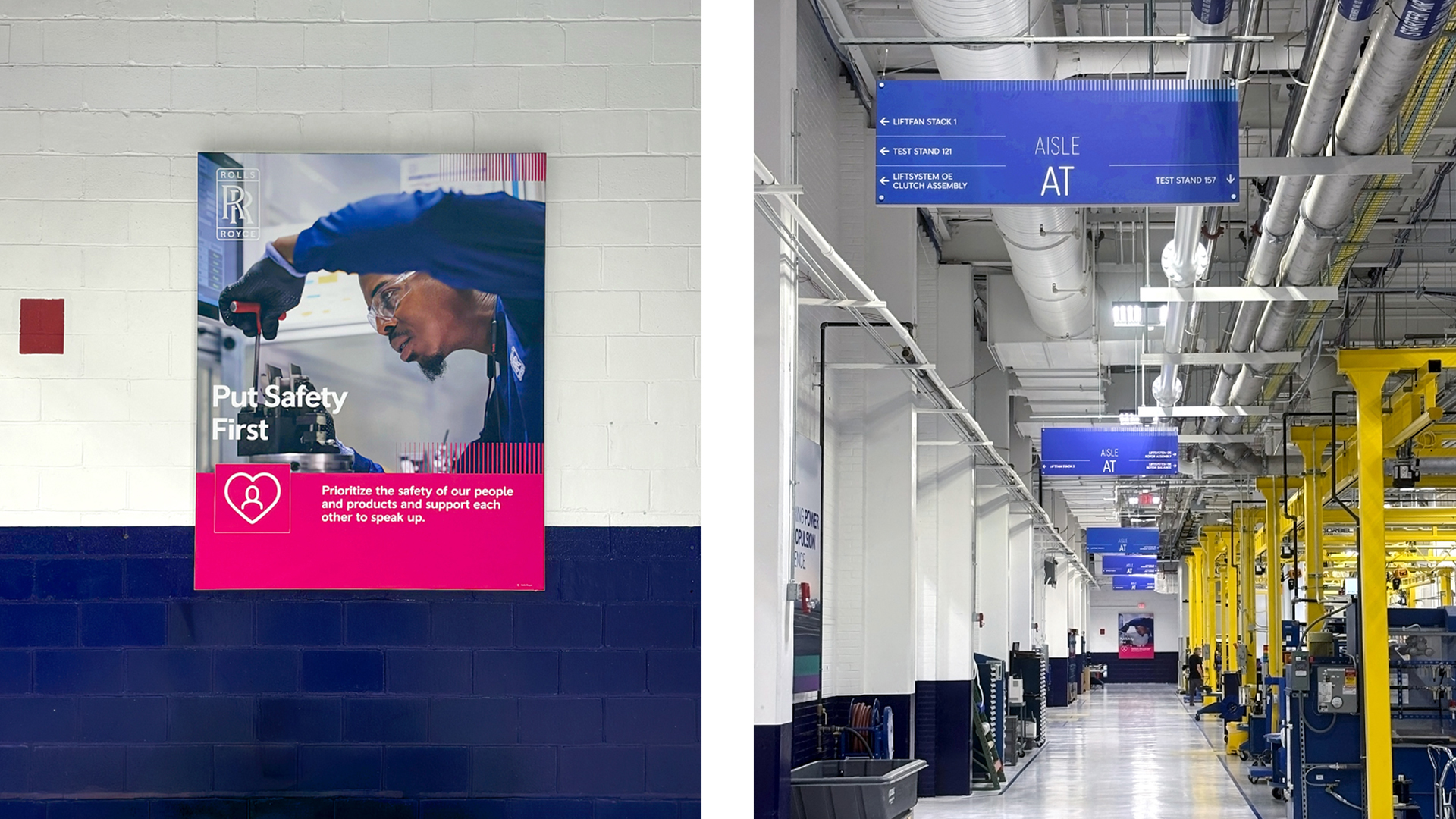
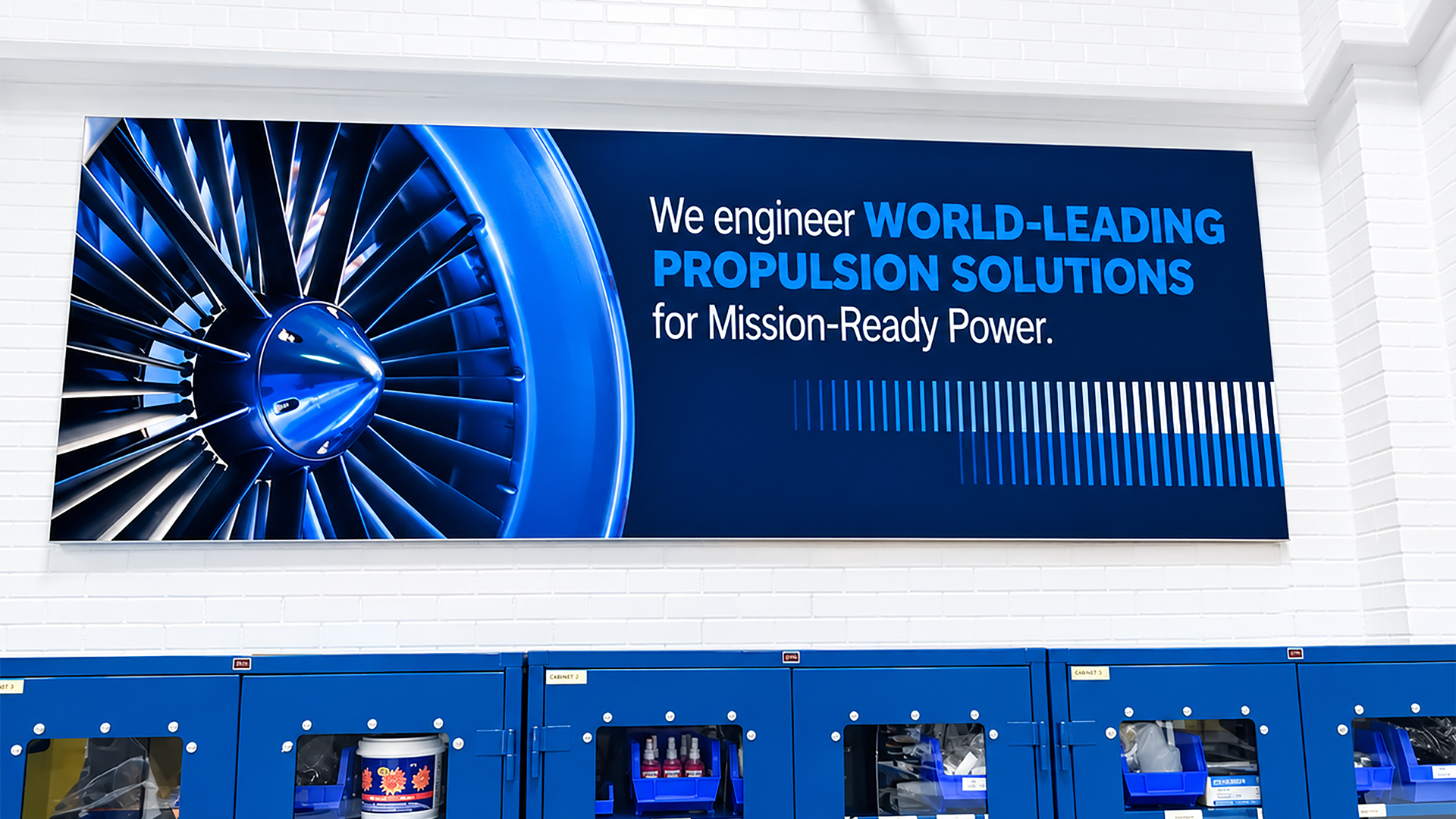
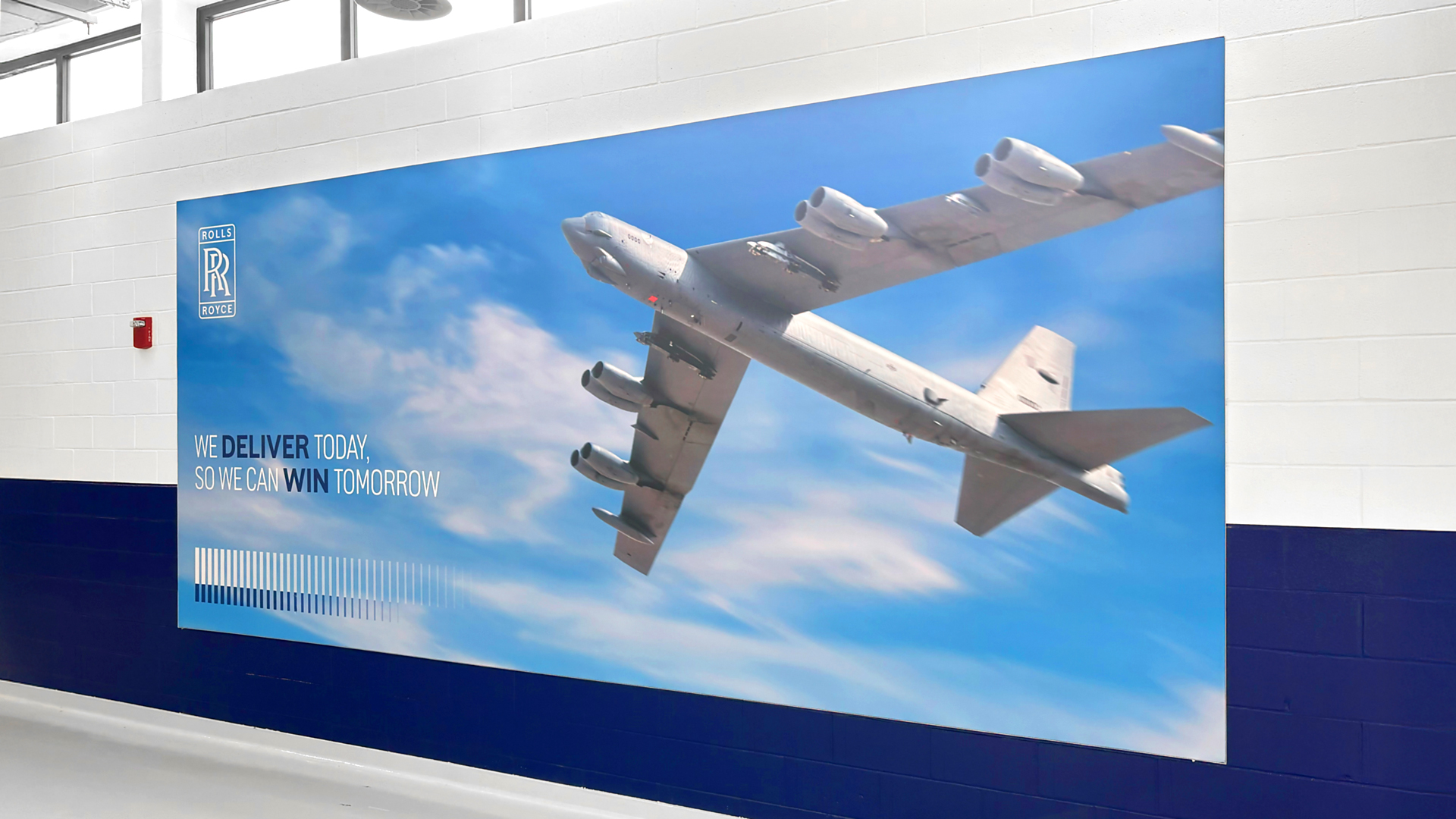
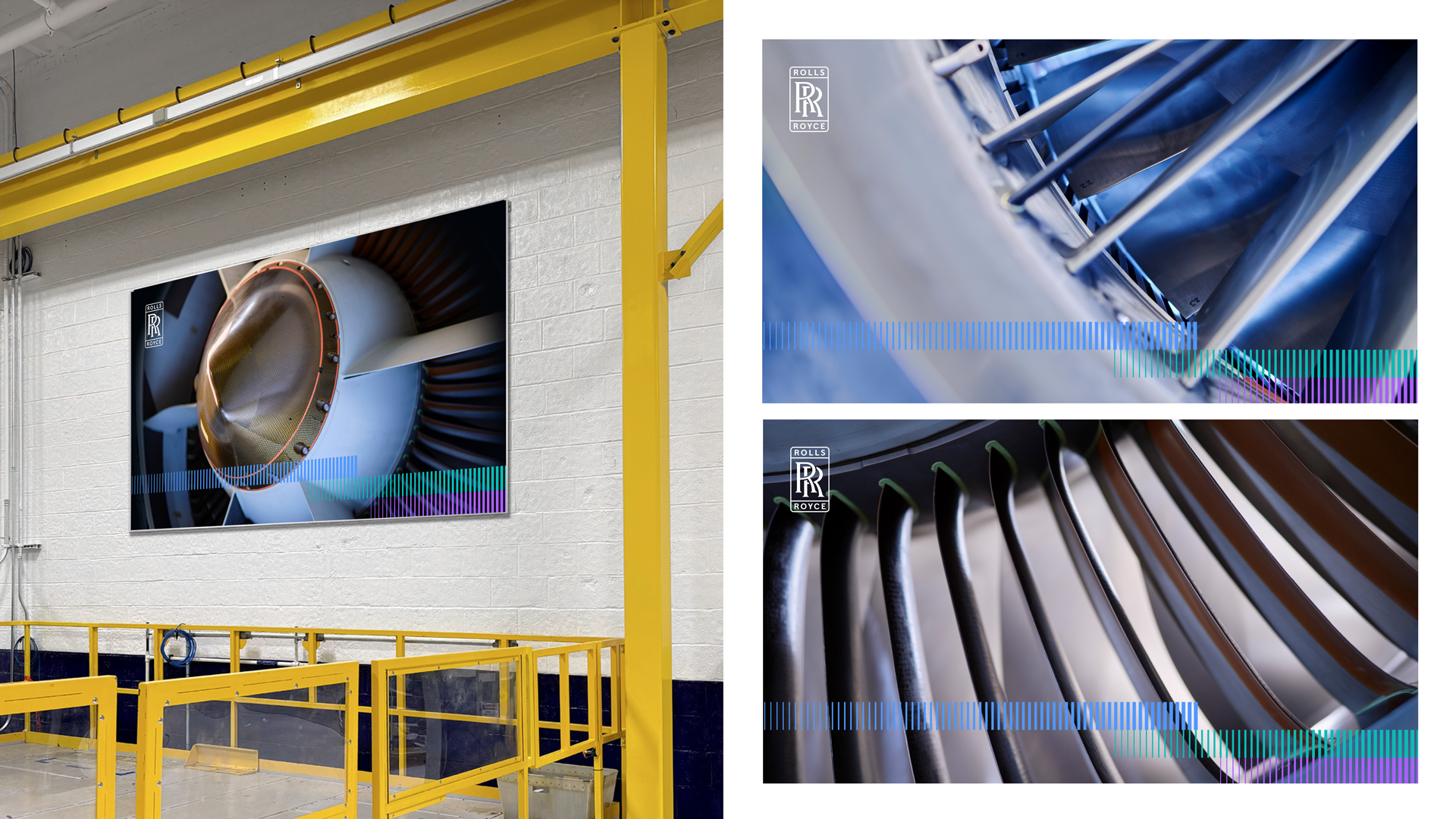
The tour experience was developed as a visual story that progresses through the manufacturing process. Each area communicates a different part of the Rolls-Royce story, while the overall sequence helps visitors understand how individual components, processes, people, and testing come together to produce a finished aerospace engine. Initial signage identifies the technology featured in the area and provides context for what visitors will see and discuss.
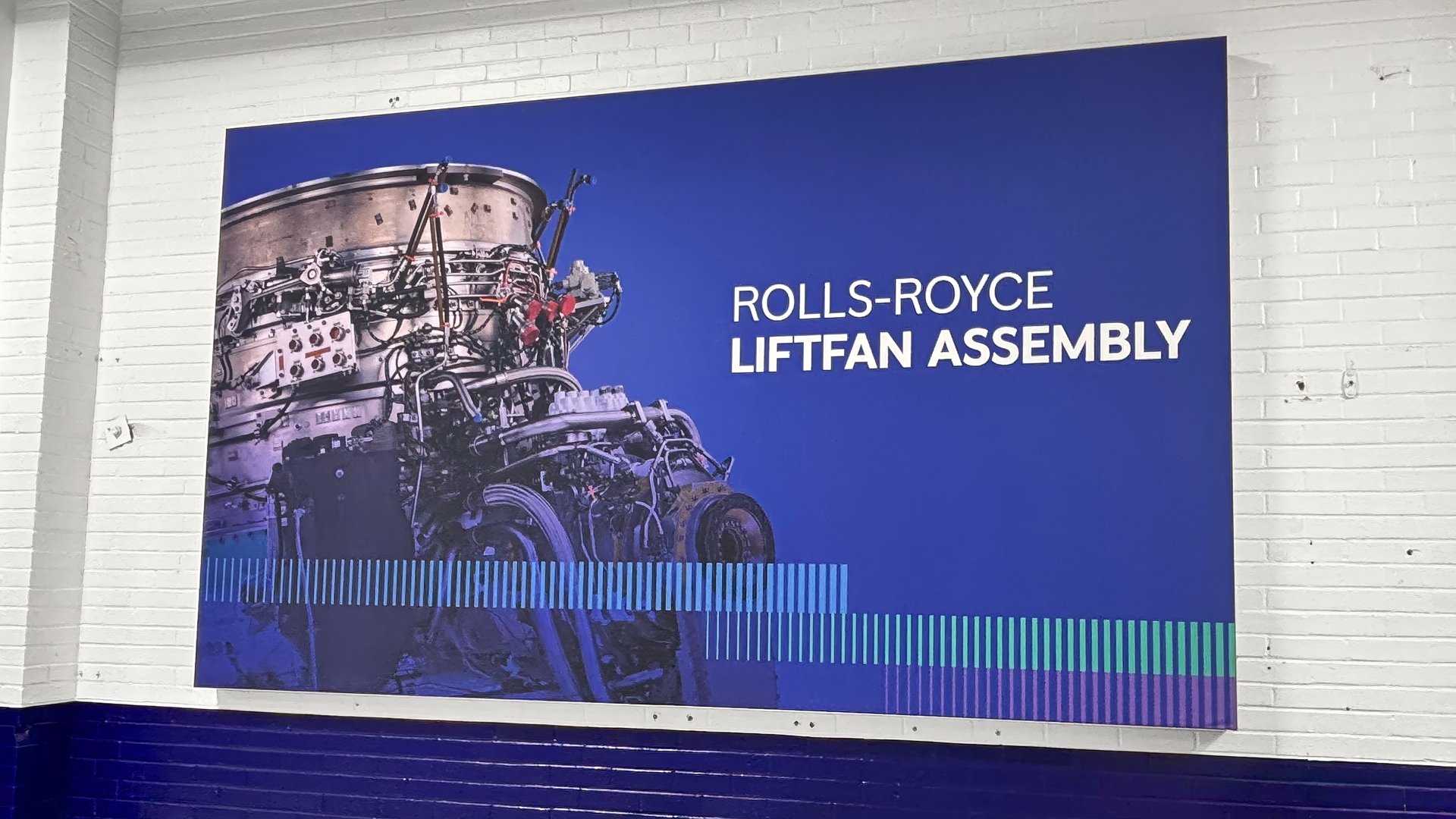
The explanation of the engine manufacturing process begins with the production of high-quality components—the foundation and core of the products Rolls-Royce produces.
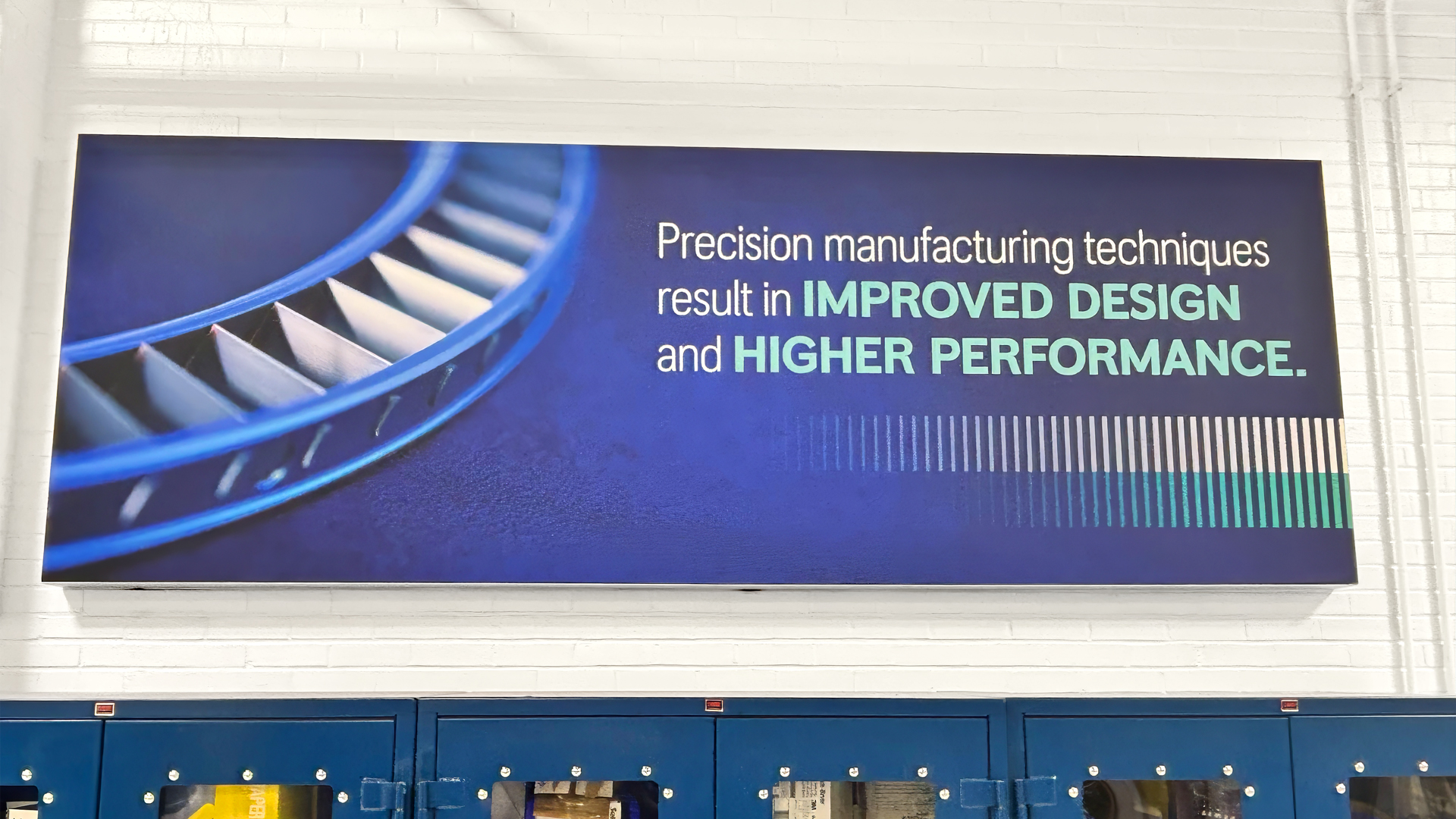
Here, tour guides discuss the legacy of the engine while introducing visitors to the adjacent assembly processes that transform individual components into finished products.
Introducing the human element into the graphics was key to the overall design. The photography connects the advanced facilities and technologies with the innovative thinking, expertise, and work of the people behind them.
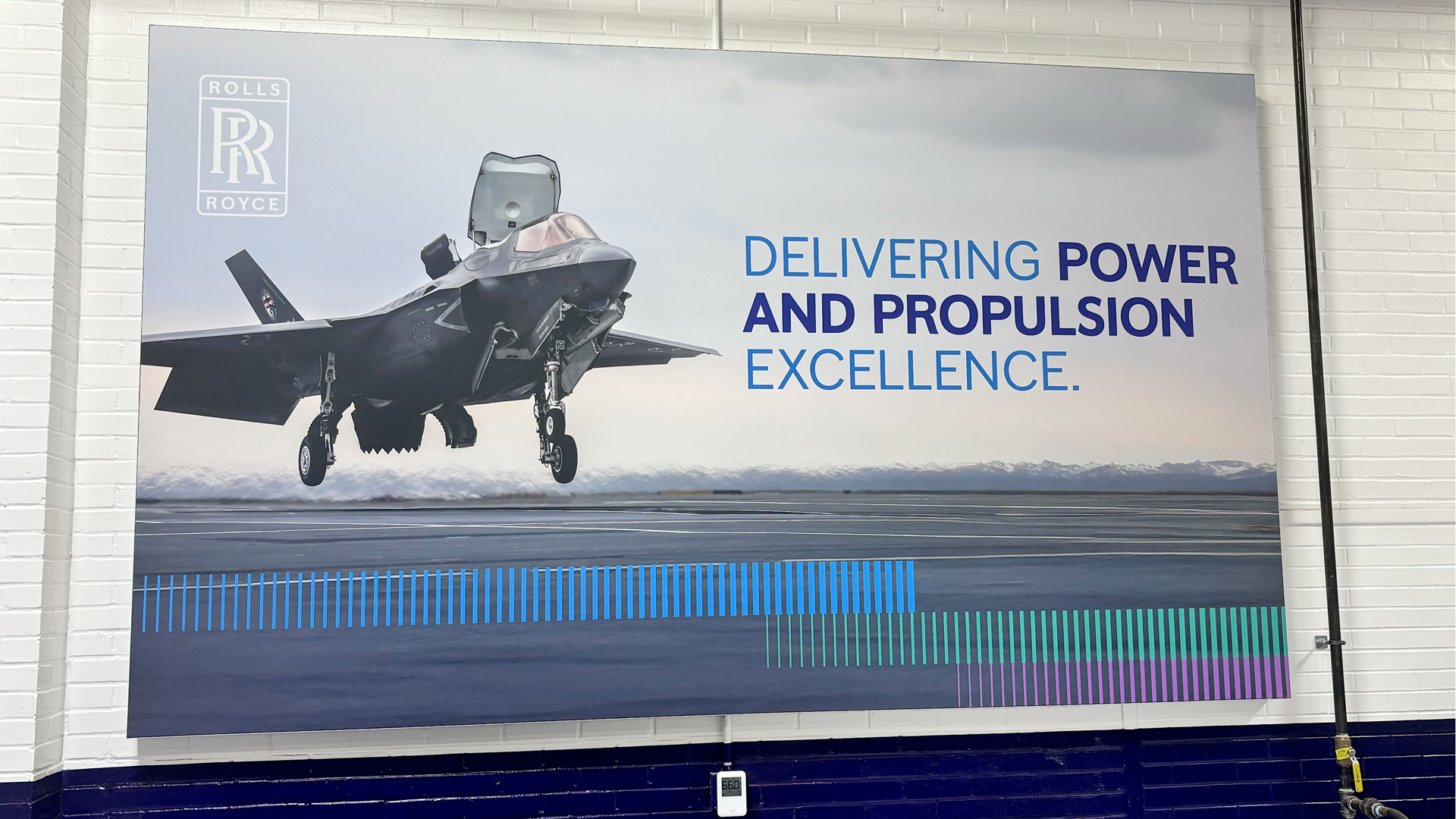
The final image represents the completed journey: products that have been tested, delivered, and placed into service.
Introduction • Parts • Products • People • Delivery
This consistent structure helped create a cohesive tour experience while allowing each area to communicate its own specific story.
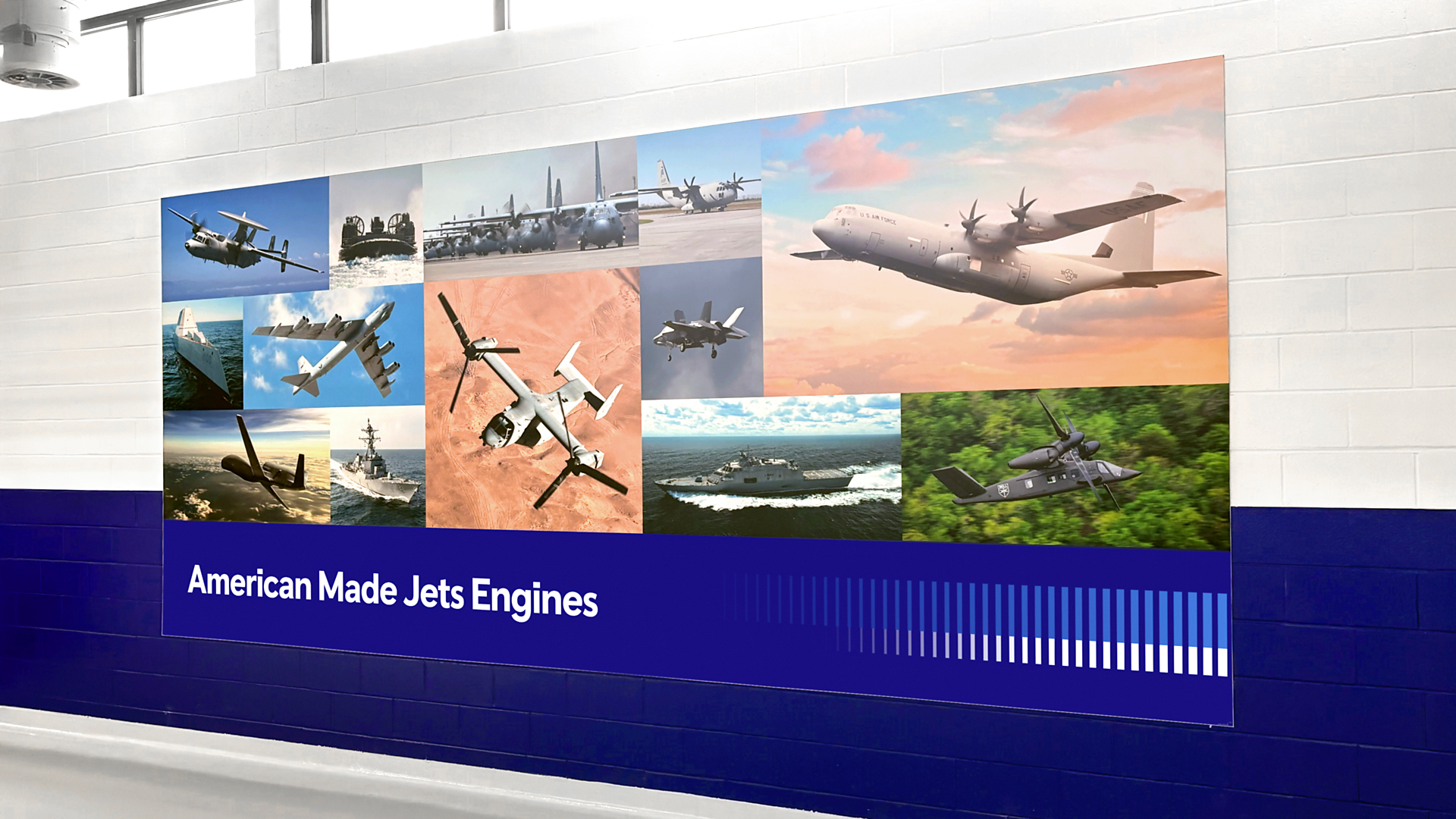
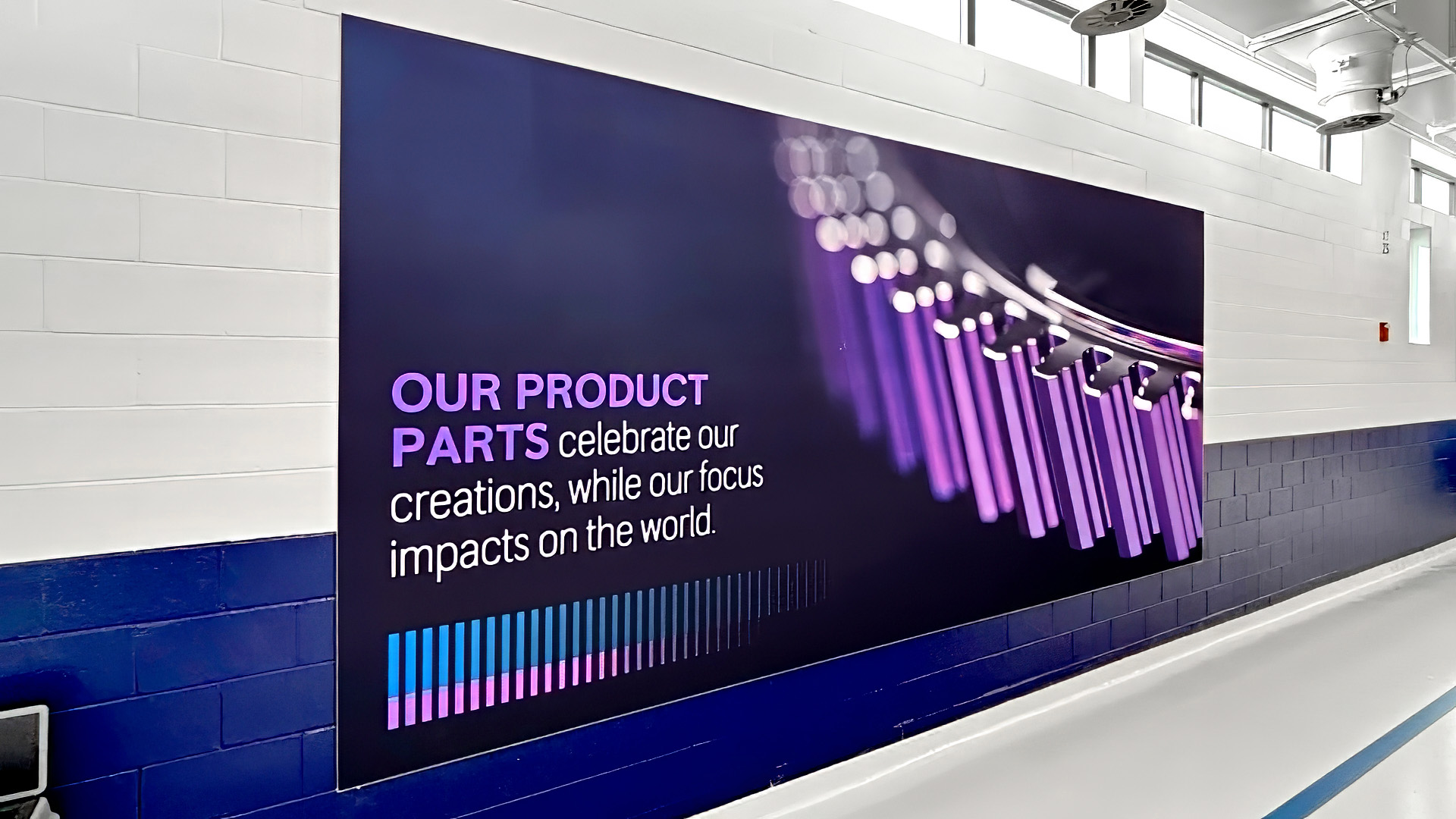
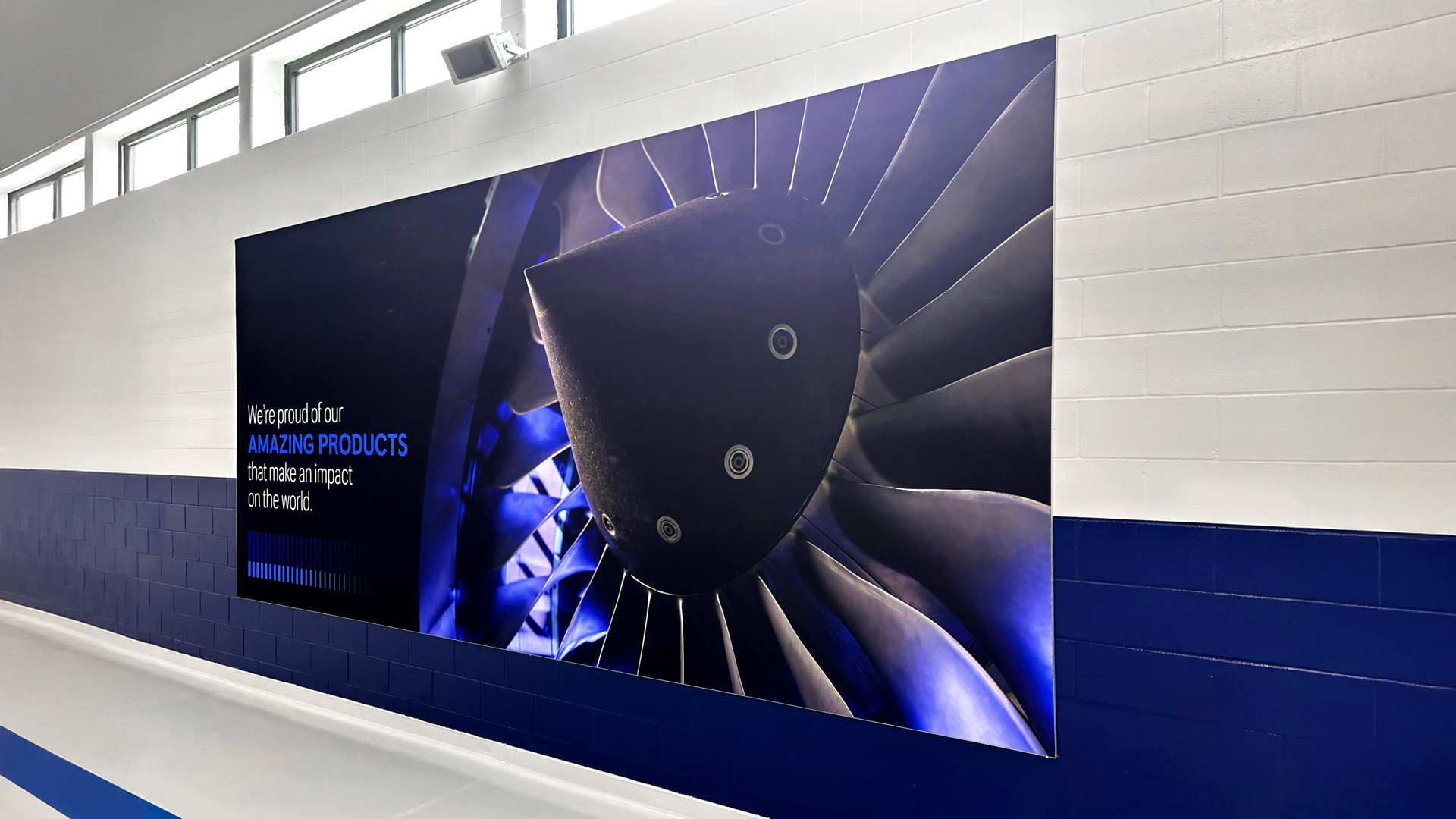
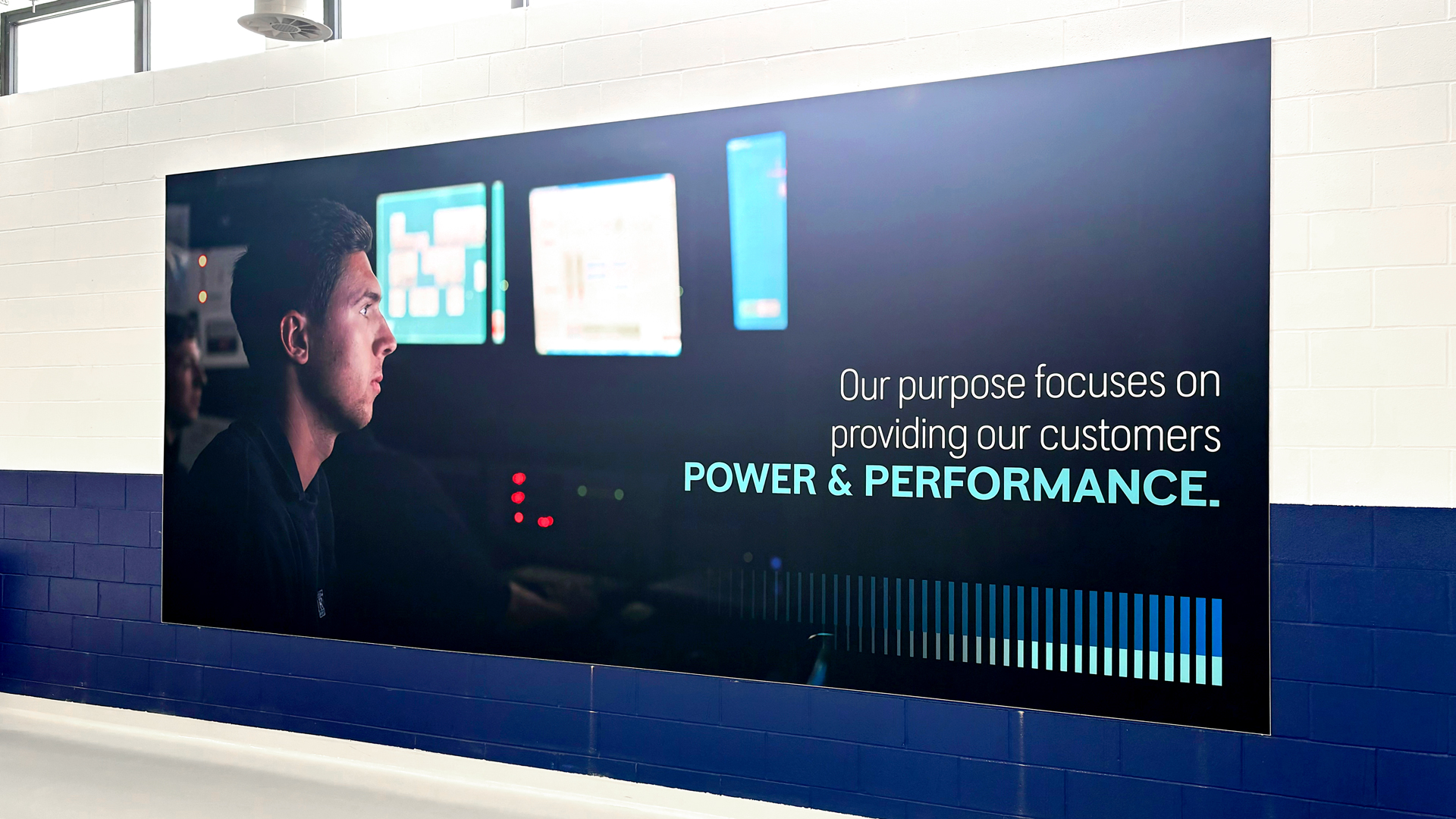
Open spaces throughout the facility were used for internal promotional graphics and Purpose and Behavior messaging. The internal promotional graphics recognize and place value on the people who manufacture world-leading aerospace technologies.
Purpose and Behavior graphics communicate the four factors that guide how the company achieves its goals:
Safety • Keeping It Simple • Doing the Right Thing • Making a Difference
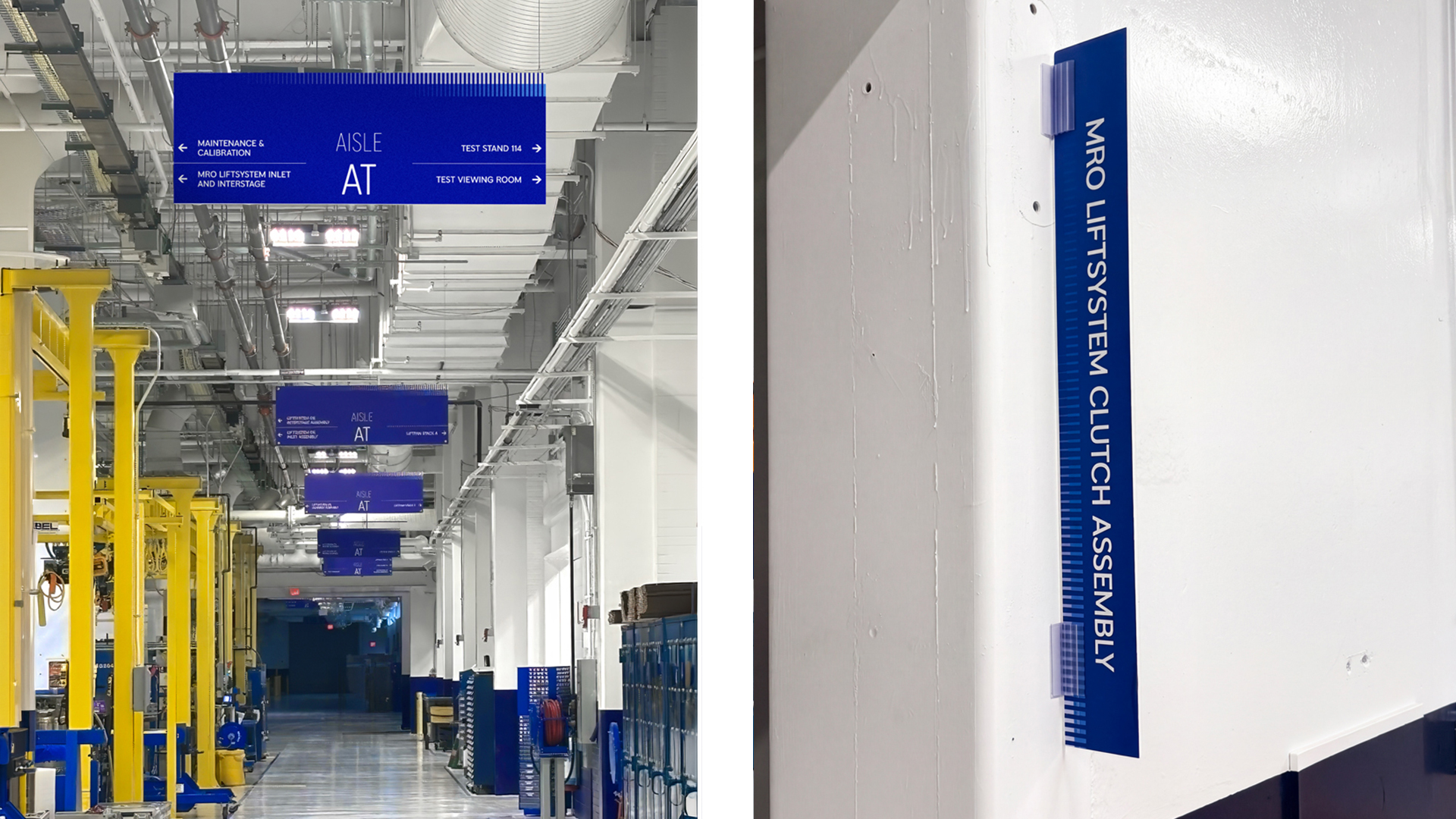
Navigation was an important component of the project. With multiple cells, assembly areas, workspaces, and general production zones, clear wayfinding is essential throughout the facility.
Because of varying ceiling heights, traditional hanging signs were not practical in every location. In these areas, I implemented aisle-violator fins as an alternative wayfinding solution. This simple application provided an effective method for identifying the facility's numerous areas where suspended signage was not achievable.
The project presented a number of physical and operational challenges. Many key graphic locations contained visual obstructions such as piping, vents, machinery, and storage areas. These conditions required adjustments to graphic sizes and placements in certain locations, even though my goal was to maintain consistent graphic dimensions throughout the facility.
The installation phase was also delayed by safety-regulation concerns. I ultimately had to mediate between the installation vendor and a global safety administration organization to resolve the issues and move the project forward.
Despite these challenges, I was able to maintain the intended visual approach: a clean white sightline accented with strategic pops of brand color, bold environmental graphics, clear navigation, and authentic photography.
The result is an environment that not only supports the operational needs of the facility, but also creates a more engaging and informative experience for government officials, military personnel, customers, partners, and other key visitors touring the production floor.